
Choosing a wood floor lamp for reading is not only about the lamp’s style. Reading comfort depends on the “light zone” you build around your chair or sofa seat: where the light lands, how evenly it spreads across pages, and whether it stays out of your direct line of sight. A lamp can look perfect in the corner and still fail at reading if it creates glare, shadows, or uneven brightness. This guide explains how to set up a wood floor lamp for reading so the light zone feels comfortable and practical. You will learn how to position the lamp beside seating, how to choose a shade direction that supports focused light, and how to test for common problems like eye strain, screen reflections, and shadows from your hands.
What a “better light zone” means for reading
A better light zone is a small, consistent area of focused brightness around your reading seat. It should illuminate the book or device clearly while keeping surrounding areas softer, so the room still feels calm. The best wood floor lamp for reading creates enough contrast to make text easy to see, without making the shade or bulb feel harsh when you glance up. Quick test:Sit in your reading position and open a book. If you need to tilt the book repeatedly to “find the light,” your lamp placement or shade direction likely needs adjustment.
Best placement for a wood floor lamp for reading
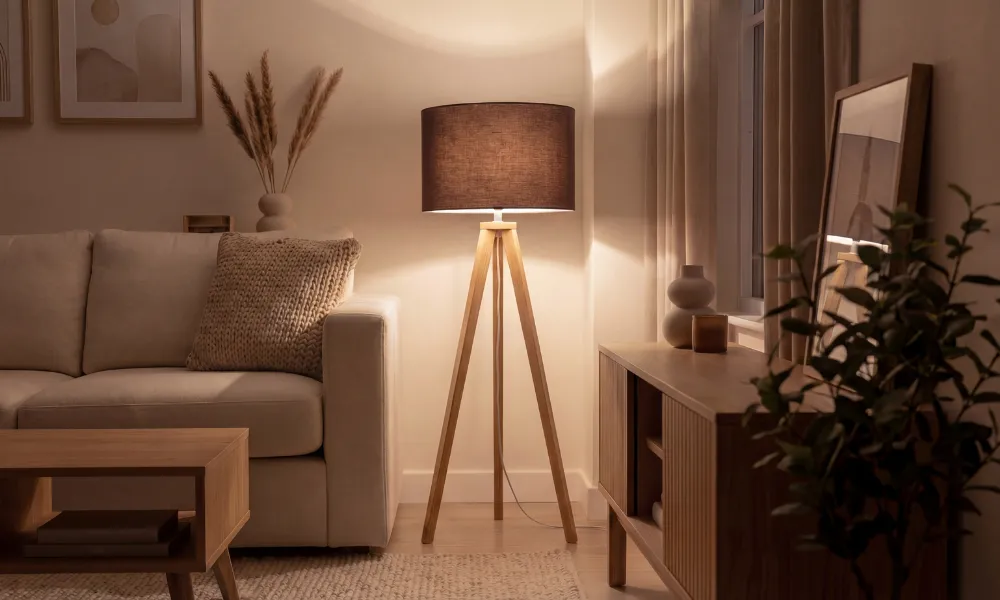
Placement does most of the work. A wood floor lamp for reading typically performs best when it sits just outside the arm of your chair or sofa, slightly forward of the backrest line. This position lets the light fall onto the page instead of behind your head, which would cause your body to block the beam and create shadows.
Outside the arm, slightly forward
Start by placing the lamp near the outside edge of the armrest. Move it forward until the light naturally falls onto your lap area. If the lamp is too far back, the light zone shifts behind you and becomes less useful. If it is too far forward, it can create glare and feel intrusive in the room.
Match placement to your dominant hand
For many readers, shadows come from the hand and arm holding the book. If possible, position the lamp on the side that reduces shadowing on the page. The goal is not a strict rule, but a practical outcome: the page should stay evenly lit when you turn pages or adjust your posture.
Reading in a corner: angle toward the seat
If your reading chair sits in a corner, your wood floor lamp can still work well. Place the lamp slightly behind the chair’s front edge and angle the shade so light spreads across the seat rather than lighting the wall. Corner setups often feel cozy, but they need careful aiming so the light zone lands where you read.
Height and shade direction: the two comfort controls
Once placement is close, height and shade direction determine comfort. Even a well-positioned lamp can feel irritating if the brightest point sits in your line of sight. A wood floor lamp for reading typically works best when the shade hides the bulb and directs light downward or outward toward the page.
Downward-facing shades for focused reading light
Downward-facing shades concentrate light on the book and reduce wasted brightness elsewhere. This can be helpful if you read at night while others watch TV or rest. A downward shade also makes the light zone easier to control, which is useful in smaller living rooms where you do not want the entire room brightly lit.
Adjustable shades for flexible reading positions
If you change positions often, an adjustable shade can keep the light zone consistent. This is especially useful when you switch between a sofa and an accent chair, or when you read both books and screens. The ability to shift the shade slightly can prevent glare and keep light landing where you need it.
Outward diffusion for a softer reading zone
Some reading spaces feel best with a slightly softer edge to the light zone. If the shade diffuses light outward while still providing direction, you can read comfortably without the “spotlight” effect. This often works well in living rooms that also serve as a social space, where you want reading light without making the room feel overly bright.
How to prevent glare when using a wood floor lamp for reading
Glare is the most common reason a reading lamp feels uncomfortable. It happens when the bulb is visible or when the shade interior appears overly bright from your seated angle. Preventing glare often requires small changes rather than a full redesign.
- Lower glare by positioning the lamp so the shade edge sits above your seated eye level.
- Avoid placing the lamp directly in front of your seat where your eyes face the brightest point.
- If you read with glasses, test the lamp at night to confirm reflections are not distracting.
- Keep the lamp slightly to the side and aim the shade toward the book, not toward your face.
If you read on a tablet, check for screen reflections. The best wood floor lamp for reading keeps the light zone on the page without bouncing a bright highlight back into your eyes.
How to avoid shadows on the page
Shadows usually come from three sources: your head, your shoulders, or your arms. If the lamp sits behind you, your head blocks light. If the lamp is too low, your shoulders can cast shadows. If the lamp is on the wrong side for your reading posture, your hand can create a moving shadow across the page.
Fixing head and shoulder shadows
Move the lamp slightly forward and outward so the light crosses your reading area from the side. This often removes the “dark lap” effect that happens when a lamp sits too far behind the seat. If the shade is fixed, you may need to adjust the lamp distance to change how the beam reaches the page.
Fixing hand and page-turn shadows
If page turns create flickering shadows, shift the lamp a few inches toward the front corner of the seat. The ideal light zone supports page turns without forcing you to lean or tilt the book. This is one of the best indicators that your setup is correct: reading becomes effortless.
Reading light zone setups for common living room layouts
Sofa reading seat with a side table
Place the wood floor lamp just beyond the side table so the table remains usable. Aim the shade so light lands in the seat zone and reaches the tabletop for easy access to books and glasses. This setup keeps the lamp integrated into the seating area rather than floating separately.
Accent chair reading corner
Place the lamp slightly behind and to the side of the chair. Maintain clearance so standing up feels natural and the base does not interrupt the walkway. If the chair swivels, keep extra space so the chair movement does not bump the lamp.
Shared living room with TV viewing
If someone reads while others watch TV, aim for a focused light zone that does not reflect on the screen. A wood floor lamp for reading can work well beside the reader’s seat if the shade directs light downward and away from the TV. Test at night to confirm reflections are minimal.
When to choose other lamp types for reading tasks
A floor lamp is not the only reading solution. If your reading happens at a desk, a task lamp can provide more direct control. If you prefer reading in bed, a bedroom-focused lamp setup may feel more practical. The best lighting plan uses the right form for the right activity, then keeps style consistent across collections. Browse lighting options based on where you read and relax: Floor Lamps, Desk Lamps, Bedroom Lamps, and Outdoor Lamps. For more room-by-room guidance, explore the blog category Wood Floor Lamp Guide: Height, Shade Direction, And Room Placement for related posts that help you build comfortable light zones throughout the home.
Final checklist for a wood floor lamp for reading
A good reading setup should feel easy from the first page to the last. Use this checklist to confirm your light zone is working:
- The lamp lights the page clearly without making the bulb visible from your seated angle.
- The light falls onto the lap or side table area without heavy shadows from your head or shoulders.
- Page turns do not create distracting moving shadows.
- The base stays out of walkways and does not interfere with standing up.
- If you read on a screen, reflections are minimal and the light remains comfortable.
With the right placement, height, and shade direction, a wood floor lamp for reading becomes part of your daily routine. The best setup is the one that disappears into the background, leaving you with a calm, usable light zone that makes reading feel natural.