
A tall wood floor lamp can solve two problems at once: it adds usable light where overhead fixtures feel too harsh, and it brings vertical balance to rooms with higher ceilings or larger furniture. The challenge is that “tall” is not automatically “better.” A lamp that is too short for a lofty room can look undersized, while a lamp that is too tall for a low ceiling can create glare, awkward shadows, or an unbalanced silhouette. This tall wood floor lamp guide explains how to match lamp height to ceiling height and room layout. You will learn how to check proportion, choose a shade direction that fits the way you use the room, and place the lamp so it supports seating zones, corners, and open-plan spaces without blocking movement.
What “tall” means in a tall wood floor lamp guide
“Tall” is relative to the room. A lamp that feels tall next to a low sofa in a standard-height space might feel average in a room with a high ceiling or vaulted architecture. The better approach is to judge height by what the lamp needs to do: keep the brightest part of the shade out of direct eye line, distribute light beyond a single small area, and visually connect the floor to the upper portion of the room. Proportion check: Sit in your main seat and imagine where the bottom edge of the shade will land. If the shade would sit below your seated eye level, you are more likely to notice glare. If the shade sits far above the seated zone without lighting the area you use, the lamp may feel tall but not helpful.
Matching ceiling height with a tall wood floor lamp
Ceiling height changes how light spreads. In taller rooms, light can disappear upward, leaving the seating zone dim. A taller lamp helps push light across the room, but the shade direction matters. Upward light can soften the room and add ambient comfort, while downward light supports reading and tasks. If your ceiling is high, you often get better results when the lamp height and shade direction work together.
Standard ceilings and balanced height
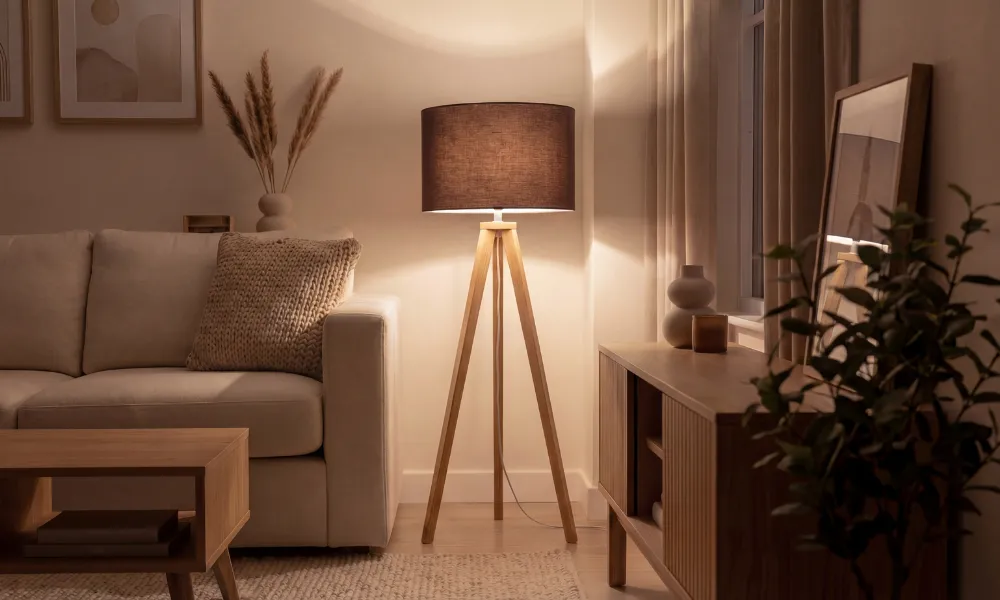
In rooms with standard ceilings, a tall wood floor lamp is often used to add visual presence near sofas, accent chairs, or corners. The key is avoiding a lamp that overwhelms the seating area. If you sit close to the lamp, prioritize glare control and keep the brightest point slightly above eye level rather than directly in view.
Higher ceilings and vertical balance
In rooms with higher ceilings, a tall lamp helps fill the vertical space so the room does not feel top-heavy. This is especially helpful if you have large wall art, tall shelving, or a high-backed sectional. A taller wood floor lamp can act as a bridge between furniture height and the upper walls, making the room feel more cohesive.
Vaulted ceilings and uneven light distribution
Vaulted ceilings can create uneven brightness because light pools near the top and leaves corners darker. A tall wood floor lamp can add consistent light in the zones where you spend time. If the room feels bright near the ceiling but dim at seating level, avoid aiming too much light upward. Instead, use a shade that spreads light outward or slightly downward into the living zone.
Layout-first planning for tall wood floor lamp placement
Room layout determines the best role for a tall lamp. A living room with one main sofa needs different lighting than a layout with two facing sofas, multiple chairs, or an open-plan footprint. Start by identifying your primary “use zones,” then choose placement that supports those zones instead of placing a lamp based only on symmetry.
Next to a sectional
Sectionals create deep seating areas and longer edges. A tall wood floor lamp often works best at the end of the sectional or at an outer corner where it can light the seating zone without getting trapped behind cushions. If the lamp sits too far inside the sectional corner, bodies and pillows can block light and create shadows where you want comfort.
Between two seating pieces
If you have a sofa and an accent chair, a tall lamp can sit between them to serve both seats. In this setup, choose a shade direction that spreads light across the shared zone. Keep the base slightly back from the front edge of seating so people can step through the space without bumping it.
In a corner to finish the room
Corner placement is one of the most reliable uses for a tall wood floor lamp because it adds height without consuming the center of the room. It also helps corners feel intentional rather than empty. Angle the shade so light spreads toward the center of the room, and keep a small gap from the wall to avoid scuffing and awkward shadows.
Glare control and shade direction for tall lamps
The taller the lamp, the more likely the light will be closer to your eye line when you are standing or walking through the room. That is why glare control matters. A tall lamp can be comfortable if the shade hides the brightest point and directs light where you need it.
- Upward-facing shades: help create soft ambient light in larger rooms, but can waste light in very tall spaces if not balanced.
- Downward-facing shades: support reading and focused zones, especially near sofas and chairs.
- Outward-diffusing shades: distribute light across walls and seating areas, useful for open layouts.
A tall lamp can look visually correct and still feel uncomfortable if the shade exposes the bulb. When possible, prioritize designs that soften the light source and reduce direct brightness in the line of sight.
Common living room scenarios: where tall wood floor lamps perform best
Reading zone beside a sofa
A tall wood floor lamp beside a sofa can light a reading seat without relying on overhead fixtures. Place it just outside the sofa arm, and position the shade so light lands on the lap or side table area. If the lamp is too far behind the sofa, your body blocks the light and you end up with a shadow where you want clarity.
Near a TV without screen reflections
Tall lamps can improve TV comfort by reducing the harsh contrast of a bright screen in a dark room, but placement must avoid reflections. Position the lamp off to the side and slightly behind the viewing angle. If you notice glare on the screen, move the lamp sideways or adjust the shade direction so light does not strike the screen directly.
Open-plan spaces that need zoning
In open-plan layouts, a tall wood floor lamp helps define the living zone. Place it at the edge of the seating area, near the rug boundary, so it creates a clear “lighting anchor.” This makes the living room feel separated from dining or kitchen zones without adding walls.
How to choose the right lamp type across the home
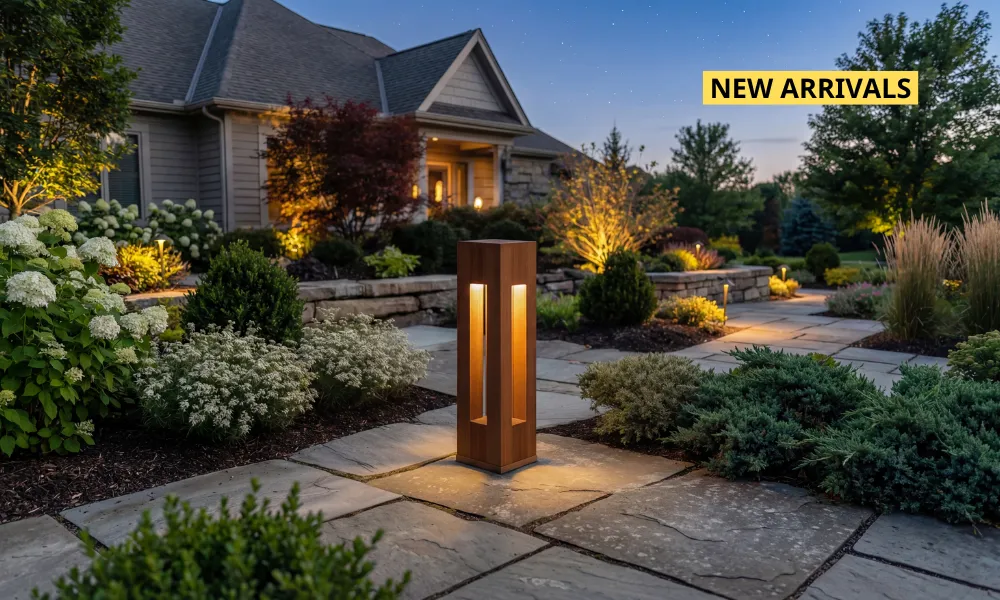
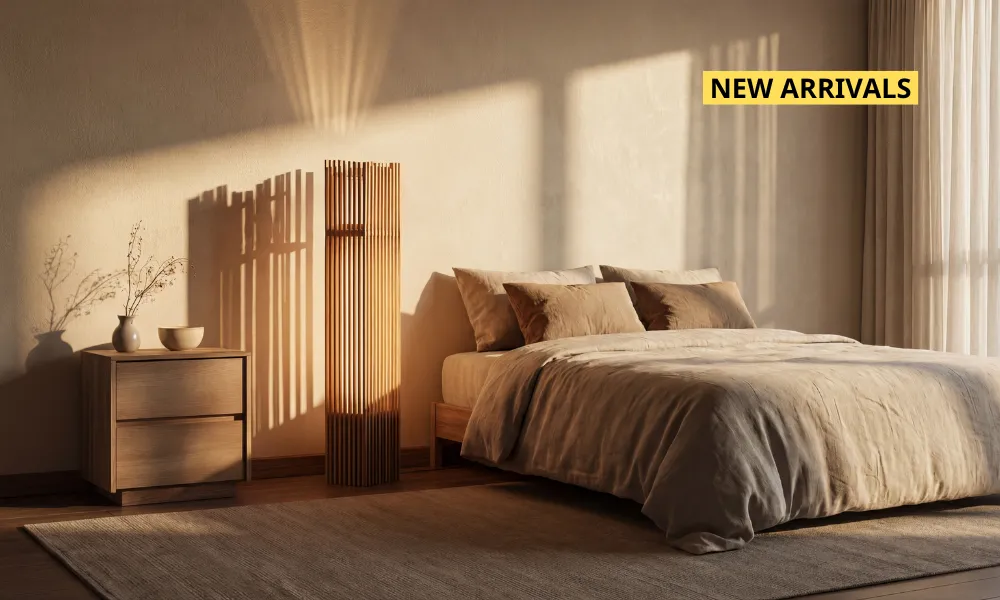
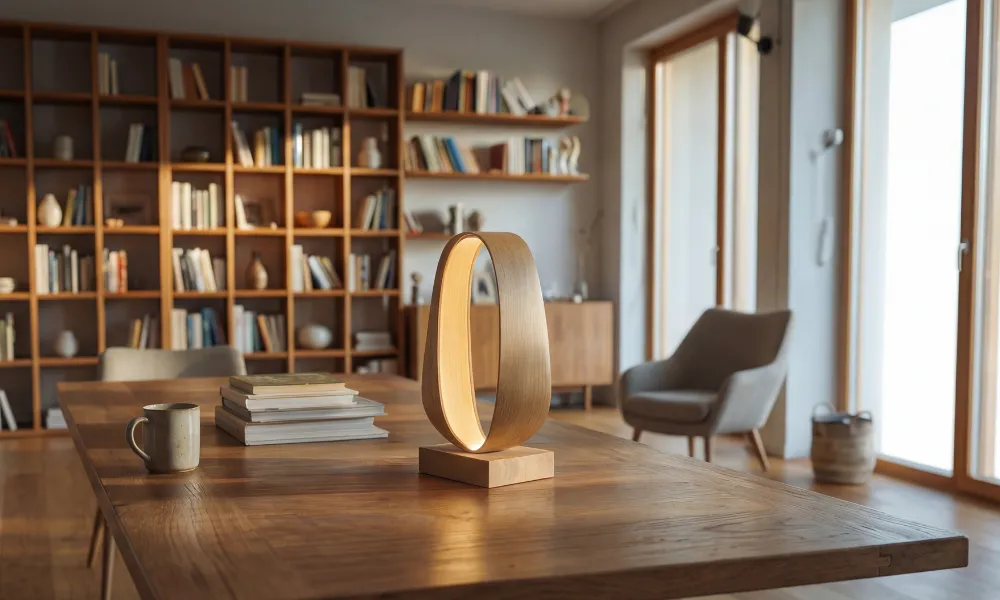
Tall floor lamps often work best in shared spaces, but a cohesive lighting plan uses the right lamp type in each room. Bedrooms usually benefit from softer lighting close to the bed, desks often require focused task light, and outdoor spaces need lighting that matches the conditions and layout outside. Explore your lighting collections based on where you plan to use them: Floor Lamps, Bedroom Lamps, Desk Lamps, and Outdoor Lamps. For related learning content, continue to the blog category Wood Floor Lamp Guide: Height, Shade Direction, And Room Placement for more layout examples and practical room-by-room guidance.
Final checklist for tall wood floor lamp selection
Before you buy, confirm the lamp fits both the ceiling height and the way you use the room. A tall wood floor lamp should bring comfortable brightness to seating zones, improve balance in the layout, and feel easy to walk around.
- Check seated eye level near the planned spot to reduce glare.
- Match shade direction to your goal: ambient comfort or focused reading light.
- Confirm the base size will not block walkways or seating access.
- Use the rug or seating arrangement to map the lamp’s “lighting zone.”