
Why bedside lamp height matters more than most people think
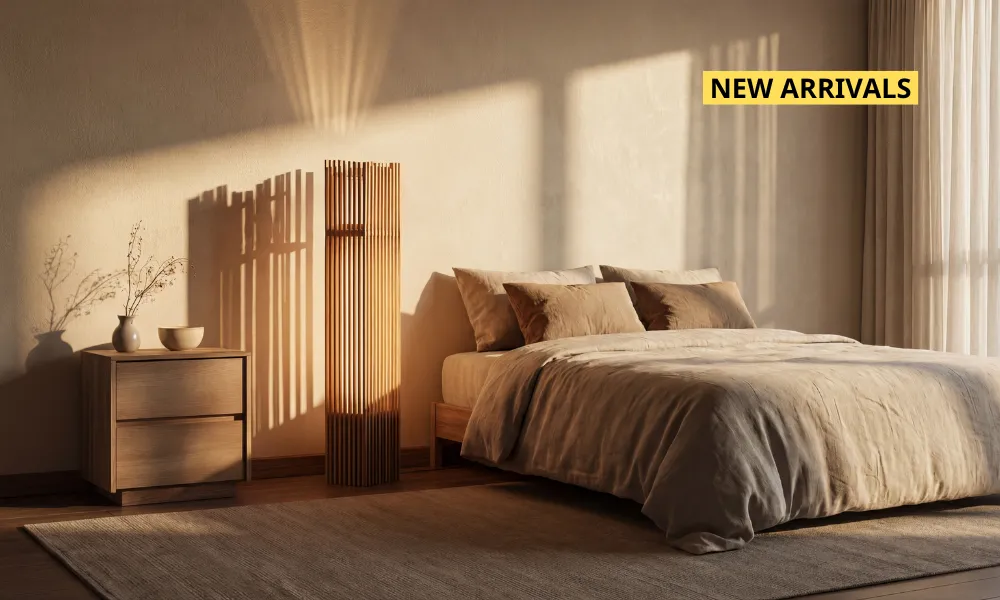
Bedside lighting is personal because it interacts with your posture. You sit up to read, lie down to relax, and reach for the switch in the dark. A lamp that feels fine standing next to it can feel uncomfortable once you’re in bed because your sightline changes. Height also affects how light spreads across the nightstand surface: too tall and the light can feel harsh; too short and the top drawer, book, and phone area can end up dim. Choosing the right wooden bedside lamp height improves comfort and helps the lamp look proportional to the furniture.
The most reliable rule for wooden bedside lamp height
The goal is simple: when you are seated in bed, the bottom edge of the lampshade should be close to your eye level, and the bulb should be hidden from direct view. This prevents glare while keeping the light directed toward the book and nightstand surface. If your lamp uses a more open shade, the goal becomes even more important because the bulb is easier to see from bed. If you prefer a diffused look, the shade can sit slightly higher, but the bulb still shouldn’t be in your direct line of sight.
If you want to see a broad range of bedside shapes and sizes before choosing a rule-of-thumb height, start with the Bedroom Lamps collection and filter your shortlist by lamp height and shade profile.
How to check your “seated eye level” quickly
Sit in bed the way you normally read, with your usual pillows. Look toward your nightstand. Imagine a horizontal line from your eyes to the lamp. If you can see the bulb directly, the lamp is effectively too tall for that position (or the shade is too high/open). If the shade blocks most light from reaching the book, the lamp is too low (or the shade is too narrow). This quick check is more accurate than guessing by room size because it matches your real posture.
Nightstand height and lamp height: getting the proportion right
Nightstand height sets the starting point. A taller nightstand can handle a taller lamp without looking top-heavy, while a low nightstand often looks best with a slightly lower lamp and a wider shade to spread light. Proportion matters because a bedside lamp is visually close to the bed and headboard, so it becomes part of the room’s balance. A good proportion keeps the lamp from overpowering the nightstand while ensuring the light sits at a comfortable level.
For compact nightstands: prioritize a smaller base footprint and a shade that spreads light without being too tall. This helps keep surface space usable for everyday items.
For larger nightstands: you can use a slightly taller lamp or a larger shade diameter for balance, as long as the bulb stays out of your seated sightline.
What to do when the lamp looks right but feels wrong
This is common: a lamp can look balanced next to the nightstand but still cause glare from bed. In that case, prioritize comfort. The fix is usually one of three changes: adjust shade height (if the lamp design allows), choose a different shade shape that blocks the bulb, or swap to a lower-brightness bulb paired with a dimmer. When function improves, the lamp typically looks better in real use because the lighting feels calmer.
Shade direction and bulb visibility: the hidden side of lamp height
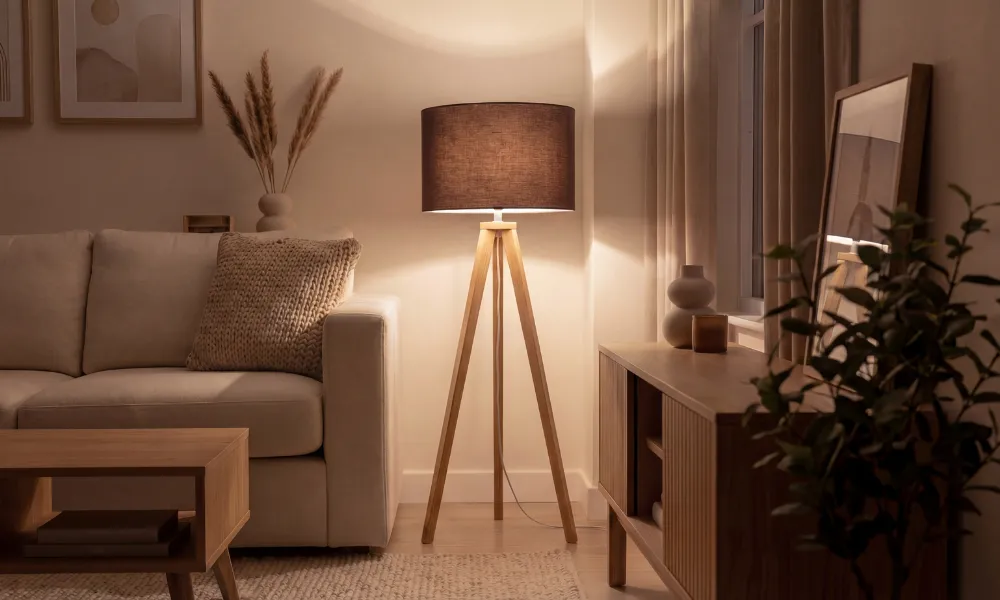
Height alone isn’t enough. Shade direction and bulb visibility determine whether the height you chose will feel comfortable. A wooden bedside lamp with a shade that directs light down and outward tends to be easier on the eyes because it keeps the brightest point hidden. A more open shade design can still work, but it requires careful bulb selection and often benefits from dimming to reduce glare.
Bulb choice that supports bedside comfort
Bedrooms typically benefit from warm, controlled light. A dimmable bulb can help you transition from reading to winding down without changing lamps. If your bedside area is also where you plan or journal, keep the bedside bulb comfortable and consider separating “task light” from “rest light.” For focused work light, the Desk Lamps collection is a better match than pushing a bedside lamp to do everything.
Placement tips that make the chosen height work better
Once height is close, placement fine-tunes performance. Position the lamp so it is easy to reach from bed, and keep the shade edge far enough from the headboard that the light can spread. If you share a bed, think about whether the lamp’s light spills across the mattress. A shade that diffuses light evenly can be more comfortable for a partner, while a slightly more directional shade supports reading without lighting the whole room.
Outlet and cord planning
Nightstands often become charging stations. Keep cords routed behind the nightstand and away from the path you walk at night. If the nightstand surface is small, a smaller lamp base can free space for a charger and a book. If you need a larger ambient glow for the whole room, you may prefer to add a second light source rather than increasing bedside bulb brightness.
For broader room illumination that stays softer than overhead light, consider pairing your bedside setup with a tall lamp from Floor Lamps, especially in bedrooms where you want gentle background light in the evening.
Common bedroom scenarios and how to pick the right bedside lamp height
Small bedrooms and apartments
In smaller bedrooms, the bedside lamp often does double duty as ambient light. In these spaces, height should still keep the bulb out of your sightline, but shade diameter becomes more important because you need the light to spread without raising brightness too much. A dimmable bulb helps control the mood without forcing you to choose a single “perfect” brightness level.
Shared bedrooms
In shared bedrooms, comfort is the priority. If one person reads more, you can choose a slightly more controlled shade on that side to keep light contained. If both people read, matching heights can keep the room balanced, but dimming is still valuable to avoid harsh light late at night.
Bedrooms with balcony or patio access
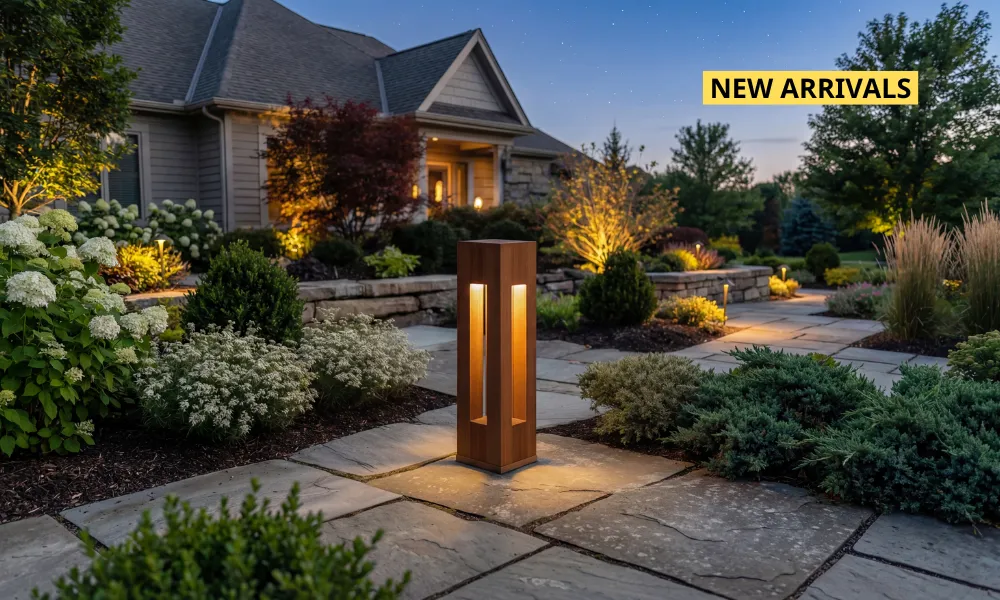
If your bedroom connects to an outdoor area, you may want the lighting feel to transition smoothly. Keep your bedside lamp warm and comfortable indoors, then use outdoor-ready lighting outside for safety and atmosphere. The Outdoor Lamps collection can help extend the same calm mood beyond the bedroom without relying on indoor fixtures.
How this bedside lamp height guide connects to your full bedroom lighting plan
Bedside lamp height is one piece of the larger bedroom lighting plan. If you want a complete overview that also covers bedside sizing, bulb selection, and placement as a system, read the pillar guide: Wooden Bedroom Lamp Guide: Bedside Sizing, Bulbs, and Placement. That article helps you combine height with bulb type, shade direction, and layered lighting choices so the entire bedroom feels consistent.
If you’re building a content path for readers, you can also point them to the category page Bedroom Lamps Lighting Journal for more bedroom-specific topics and setups.
For readers comparing bedside lighting to focused work lighting, the category Desk Lamps Task Lighting Notes is a natural next step because it separates task brightness rules from relaxation-focused bedroom lighting.
Quick checklist for choosing wooden bedside lamp height for nightstands
- Test from bed: sit up and confirm the bulb is not visible at your normal reading angle.
- Aim for the shade’s lower edge near seated eye level for comfortable reading light.
- Balance proportion: match lamp height and shade diameter to nightstand size without crowding the surface.
- Use warm, controllable bulbs; choose dimming if you read and wind down in the same space.
- Fine-tune placement for reach, cord routing, and reduced light spill across the bed.
When you choose a wooden bedside lamp height based on real posture and bulb visibility, the setup becomes easier to live with. The right height supports reading, reduces glare, and keeps your nightstand functional—without forcing the lamp to be brighter than it needs to be.