
Wood floor lamp placement in living rooms is less about “filling an empty corner” and more about creating usable light exactly where people sit, read, talk, and move. A living room is a shared space with changing needs: you might want brighter light during the day for cleaning, softer light at night for relaxing, and a focused beam for reading without turning on overhead fixtures. The right placement supports those habits while keeping paths clear and reducing glare on screens. This guide breaks down where a wood floor lamp works best in a living room layout, including common zones like sofa seating, accent chairs, corners, and media walls. You will also find practical spacing rules and quick tests you can do before committing to a final spot. If you are still deciding on lamp height and shade direction, start with your general reference guide first: Wood Floor Lamp Guide: Height, Shade Direction, and Room Placement. It helps you narrow the style and light behavior before you choose the best living room placement.
What “best placement” means for wood floor lamps in living rooms
The best wood floor lamp placement in living rooms meets three requirements at the same time: it puts light where you use it, it avoids direct glare, and it does not interrupt movement. A lamp that looks good but creates harsh brightness in your line of sight will be used less, and a lamp that blocks a walkway becomes a daily annoyance. Placement should feel natural, like the lamp was designed for the room.Simple rule: Stand in the main seating spot and look toward the lamp. If you can see the bulb or the bright interior of the shade directly, adjust the lamp position, height, or shade direction until the light feels comfortable.
Wood floor lamp placement next to a sofa
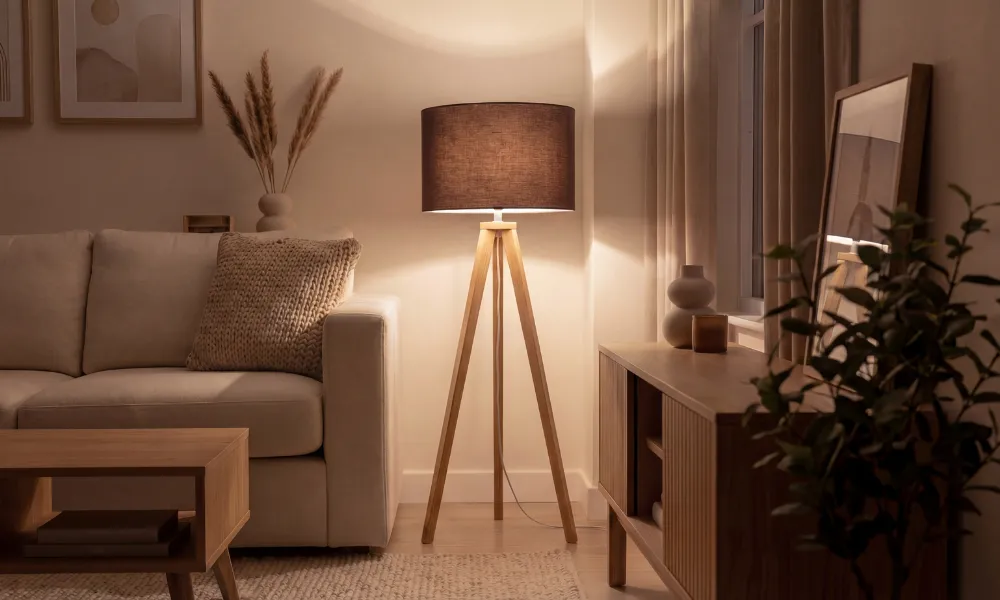
Placing a wood floor lamp near the sofa is the most common living room setup, but small placement changes can make a big difference. The ideal position is usually just outside the sofa arm, slightly behind the front edge of the seat. This keeps the lamp close enough to light the seating area while keeping the base out of the main walking path.
Outside the arm for everyday comfort
When the lamp sits outside the sofa arm, the light reaches the space where people sit without shining directly into eyes. This works well for ambient lighting and casual use. If you use the lamp for reading, angle or position the shade so light lands on the lap area or side table rather than behind the head. A lamp placed too far behind the sofa often creates a shadow on the seat and wastes light.
Pairing the lamp with a side table
A wood floor lamp and a side table can share the same zone if the layout stays clean. Leave enough space to reach the table comfortably, especially if you keep drinks, books, or remotes there. If the table is small, a slimmer lamp base can help the area feel less crowded. If the table is large, keep the lamp slightly behind the table line so the tabletop remains usable.
Wood floor lamp placement behind or beside an accent chair
Accent chairs create natural reading corners in living rooms. A wood floor lamp can define this zone and make the chair feel intentional, especially in open-plan spaces. The best placement is typically slightly behind and to the side of the chair, so the light falls across the chair area without blocking access.
Best position for reading
For reading, place the lamp on the side opposite your dominant hand if you hold a book or device, so your arm does not cast a shadow. The lamp should be close enough to provide focused light but not so close that you bump it when standing up. If the chair swivels or is frequently moved, prioritize a stable base and leave extra clearance.
When the chair sits near a wall
If your accent chair is near a wall, aim the lamp so light spreads into the room rather than spotlighting the wall. A wood floor lamp can also help highlight wall texture or art, but the living room should still feel balanced. The goal is comfortable light for people first, then visual depth for the space.
Wood floor lamp placement in corners
Corners can either feel cozy or unused, depending on lighting. A wood floor lamp in a corner adds vertical presence and helps soften hard angles. This is often the best placement in smaller living rooms where floor space is limited, but the lamp still needs to send light toward the room’s center.
- Angle the shade so light moves into the room, not directly into the corner.
- Keep a small buffer between the lamp and the walls to avoid scuffs and awkward shadows.
- Use corner placement to support ambient light when overhead lighting feels too harsh.
Placement near the TV and media wall
Living rooms often revolve around a TV, which makes glare control important. A wood floor lamp can improve comfort during evening viewing by adding soft background light that reduces contrast between the bright screen and a dark room. The key is choosing a position that does not reflect on the screen.
Where it works best
Place the lamp slightly behind the viewing angle, off to one side, so the light does not hit the screen directly. If you notice reflections, move the lamp farther sideways or adjust the shade direction. Even small changes in angle can improve screen comfort without sacrificing the warmth a wood floor lamp adds to the room.
Placement in open-plan living rooms
In open-plan layouts, lamps help define zones. Wood floor lamp placement in living rooms that share space with dining areas or kitchens should focus on creating a “lighting boundary” around seating. A lamp near the edge of the rug, beside a sofa, or behind an accent chair can signal where the living zone begins.
Use the rug as a placement map
If you use an area rug, treat it as the living room footprint. Placing the lamp just outside the rug edge often keeps it stable and accessible while still illuminating the seating area. If the lamp must sit on the rug, confirm the base sits flat and does not wobble.
Clearance and spacing rules that prevent daily frustration
A living room lamp should feel easy to move around. These practical spacing rules help you keep comfort high without overthinking the layout:
- Walkways: keep the base out of main paths so people can pass without turning sideways.
- Seating access: leave enough space to stand up and step away without contacting the lamp.
- Shade comfort: position the shade so the brightest area is not in direct view from the main seat.
- Balance: avoid clustering all lighting on one side of the room; distribute light to reduce harsh contrast.
Quick tests to confirm the best wood floor lamp placement
Before you commit to a final spot, test the placement with real routines. These quick checks take minutes but save time later:
- Sit in your main seat and turn the lamp on at night to check for glare and harsh shadows.
- Walk the most common path through the room to confirm the base does not interrupt movement.
- Watch TV with the lamp on to confirm screen reflections are minimal.
- Stand up and sit down several times near the lamp to confirm clearance feels natural.
Choosing the right lamp type for your placement plan
Once you know where the lamp will go, you can shop more efficiently. A reading corner may benefit from a more focused shade direction, while a corner placement may work better with softer room light. If you are creating a cohesive lighting plan across the home, consider how different areas use light: bedrooms often prioritize calm and comfort, desks often need focused task lighting, and outdoor areas need reliable illumination that fits the space.
Explore lighting by use-case and placement across your store: Floor Lamps, Desk Lamps, Bedroom Lamps, and Outdoor Lamps. For broader guidance on sizing and shade direction, return to the Wood Floor Lamp Guide: Height, Shade Direction, and Room Placement to keep your living room plan consistent.