
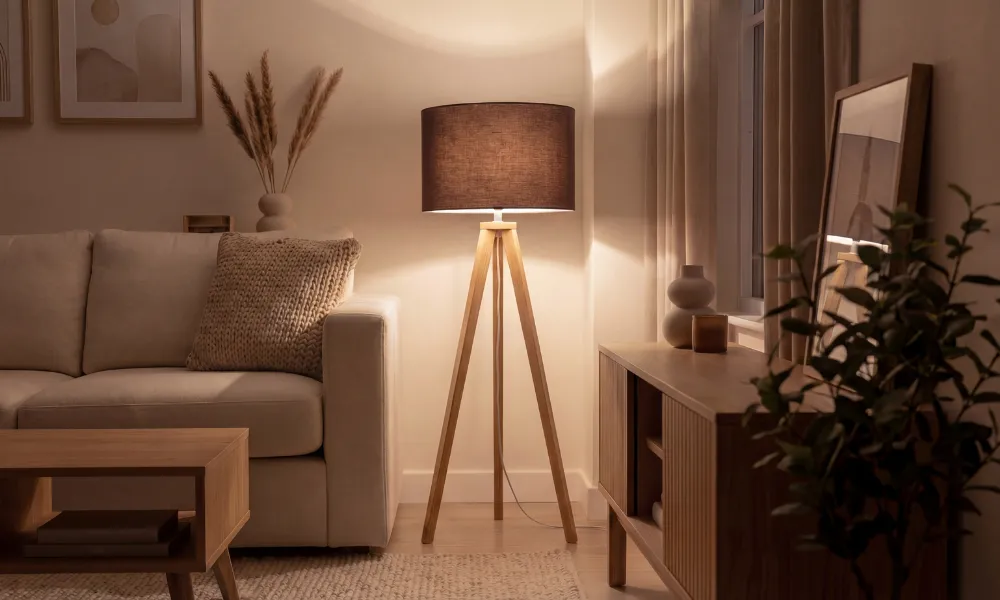
A wood floor lamp can change how a room feels without changing the room itself. The warmth of wood helps soften hard lines, while the lamp’s height and shade direction control where the light lands. This wood floor lamp guide focuses on three decisions that affect comfort and everyday use: the right lamp height, the best shade direction for your lighting goal, and practical room placement so the lamp supports the layout instead of fighting it. If you are comparing multiple options, start by measuring your seating height and the available floor space near the areas you use most. Good lighting usually comes from matching the lamp to the way you live, not from forcing a lamp into a spot that looks empty.
Wood floor lamp height guide for common setups
Height is the first filter because it affects glare, coverage, and balance. In general, floor lamps work best when the bulb or the bottom of the shade sits above eye level when you are seated. This helps prevent harsh brightness in your direct line of sight and spreads light more evenly across the room. For a typical sofa, this often means a lamp that stands roughly in the mid-to-tall range, but the better approach is to match height to the task and the furniture.
Reading next to a sofa or lounge chair
For reading, aim for light that reaches the page without shining into your eyes. A taller wood floor lamp with a shade that can direct light slightly downward is often more comfortable than a low lamp that throws light sideways. If your chair has a high back, avoid a lamp that is too short, because the chair can block light and create a shadow on your book or lap.
General ambient light for the living room
For ambient light, height helps distribute brightness across a wider area. A wood floor lamp with a taller stance can reduce harsh hotspots by lifting the light source away from the floor. If your ceilings are higher than average, a taller lamp usually looks more proportional and keeps the room from feeling bottom-heavy.
Lighting for corners and open-plan spaces
Corners can feel dim or visually unfinished, especially in open layouts. A wood floor lamp placed in a corner can add depth and help define zones, but height still matters. If the lamp is too short, it may not visually “reach” into the vertical space and can look lost. If it is too tall with a narrow shade, it may create a bright spot near the ceiling rather than comfortable room light.
Shade direction in a wood floor lamp guide: upward, downward, and adjustable
Shade direction determines how the lamp behaves. Two lamps of the same height can feel completely different if one throws light up and the other pushes it down. When choosing a wood floor lamp, think about what you want the light to do in the room: brighten the whole space, support a task like reading, or highlight a wall texture or artwork.
Upward-facing shades for softer room light
Upward-facing shades bounce light off the ceiling and upper walls, which can feel gentler and more even. This direction is often a good fit when you want the lamp to support a calm mood in the evening. If you use a wood floor lamp mainly for background brightness, an upward shade can help reduce shadows on faces and surfaces.
Downward-facing shades for tasks
Downward-facing shades concentrate light where you need it. This is useful for reading, craft projects, or any seating area where you want a defined pool of light. The key is positioning: a downward shade should be aligned so light falls to the side of your seat rather than directly over your head, which can create glare on glasses or screens.
Adjustable shades for flexible layouts
Adjustable shades give you more control when your room changes. If you move furniture seasonally, host guests, or switch between reading and ambient lighting, an adjustable shade helps one lamp serve multiple purposes. This can be especially helpful in apartments or multipurpose rooms where a single wood floor lamp needs to do more than one job.
Room placement for a wood floor lamp
Placement is where comfort becomes real. Even the right height and the right shade direction can feel wrong if the lamp is in the way, casts glare, or creates awkward shadows. Use these placement guidelines to make a wood floor lamp feel intentional and easy to live with.
Next to a sofa: outside the arm, not behind the head
Place the lamp just outside the sofa arm so light lands where you sit, not behind you. When a lamp sits behind your head, your body blocks the light and creates a shadow in the exact area you want illuminated. If the shade is downward-facing, move it slightly forward so the light falls across the seat and side table area.
Behind an accent chair: maintain a clear walking path
For accent chairs, a wood floor lamp can sit behind and slightly to the side, creating a cozy reading zone. The common mistake is pushing the lamp too close to the chair so it becomes a tripping hazard. Leave enough space so someone can stand up, turn, and walk away without bumping the base.
In a corner: angle for depth, not glare
Corner placement works best when the lamp adds depth rather than spotlighting the corner itself. If the shade directs light downward, angle it so the light spreads toward the center of the room. If it directs light upward, confirm the ceiling reflection is comfortable and not overly bright.
Near a TV: reduce reflections
If you place a wood floor lamp near a television, test for screen reflections at night. A downward shade aimed away from the screen is often easier to control. If you prefer a soft glow, an upward shade can work, but keep the lamp far enough to the side so the screen stays readable.
How to coordinate a wood floor lamp with other lamps
Rooms feel more comfortable when lighting is layered. A wood floor lamp can be the main secondary light source, but pairing it with a smaller lamp can reduce harsh contrasts. If you already use table lamps in bedrooms or on desks, keep the lighting purpose clear: floor lamps can provide zone lighting or ambient support, while smaller lamps handle focused tasks.
- Use one floor lamp to define a seating zone, then add a smaller lamp for focused work or reading.
- Keep shade direction consistent with the activity: downward for tasks, upward for general comfort.
- Avoid placing multiple lamps at the same height in the same zone, which can flatten the look and feel repetitive.
Quick checklist before you buy
Use this checklist from the wood floor lamp guide to avoid the most common issues once the lamp arrives:
- Measure the seated eye level near the lamp’s intended spot to reduce glare.
- Decide whether you need upward ambient light, downward task light, or adjustable flexibility.
- Confirm the base size fits the space without blocking walkways.
- Test the placement idea with a temporary object on the floor to verify clearance and balance.
If you are exploring options across your home, you can browse lighting by room and use-case: Bedroom Lamps, Desk Lamps, Floor Lamps, and Outdoor Lamps. For more lighting education and styling guidance, visit the Wood Floor Lamp Placement In Living Rooms: Where It Works Best and return to the homepage when you are ready to compare collections.